Brands are Built on Promises

“I don’t know how you come back from a prolonged stoppage a second time because it is unprecedented,” said Ed O’Hara, senior partner of New York-based SME Branding, “Brands are built on promises. In this case, the promised experiences of seeing the greatest athletes in the world. That’s all gone now.”

This quote really stuck out to me. I saw it today in an article in The Washington Post about the NHL lockout. Even though this quote is based off the NHL lockout, it doesn’t mean they are the only brand that need to keep their promises. All brands need to. Brands that don’t can run into issues with their fans and customers.

Since this quote comes from the NHL lockout (and I’m a hockey fan) I’m going to start by using it as an example. The last time the NHL had a lockout is cost the entire 2004-2005 season. The NHL promised fans a better experience following the cancellation of the season. Fans came back and all seemed well. The NHL was experiencing some of the highest revenue it’s ever had and games were packed. Then, another lockout came around.

The NHL has been confident that fans will return following this lockout, but I wouldn’t be so sure. My dad and I had a partial season ticket package to the Red Wings for the past few years. We had every intention of renewing this year even though I’d be living in New York and could only make it home for a few games. Now, I could care less if we get a season ticket package again. I love the Wings and will always support them, but I can do that from the comfort of my couch in New York City instead of spending the money to fly home and buy tickets. I’m not saying I will never go to another Wings game, because lets be honest, you’d never be able to keep my away from Joe Louis for forever, but I do have some serious reservations about spending so much time and money on these games.

I know I’m not the only fan that feels this way. From other blogs and articles I’ve read, a lot of fans are fed up with the NHL. No one wanted to see another lockout. This has pretty much ruined their reputation.

Any company that makes a promise to their fans something and doesn’t deliver is going to have a possible crisis on their hands and will need to recover from a lack of supporters.
Social Media Magic: The Disney Perspective

It’s no secret that Disney is everywhere. Whether its TV, Radio, clothing or entertainment, Disney is there. One place that is particularly interesting with Disney is social media. They don’t focus on their social media outlets the way others do. Harrison Kratz wrote a piece on Social Media Today that highlights this. He points out three things that Disney does to quietly own their social media.

  1. “Likes” aren’t their goal
  2. They pull on heartstrings
  3. They understand the consumer cycle

I never really thought about Disney’s social media tactics. I will be honest, I follow them on Twitter and Instagram, but mainly because I’m a shareholder and I just love the company overall. This goes back to the idea of likes not being a goal. They have an audience, so they don’t need to push.

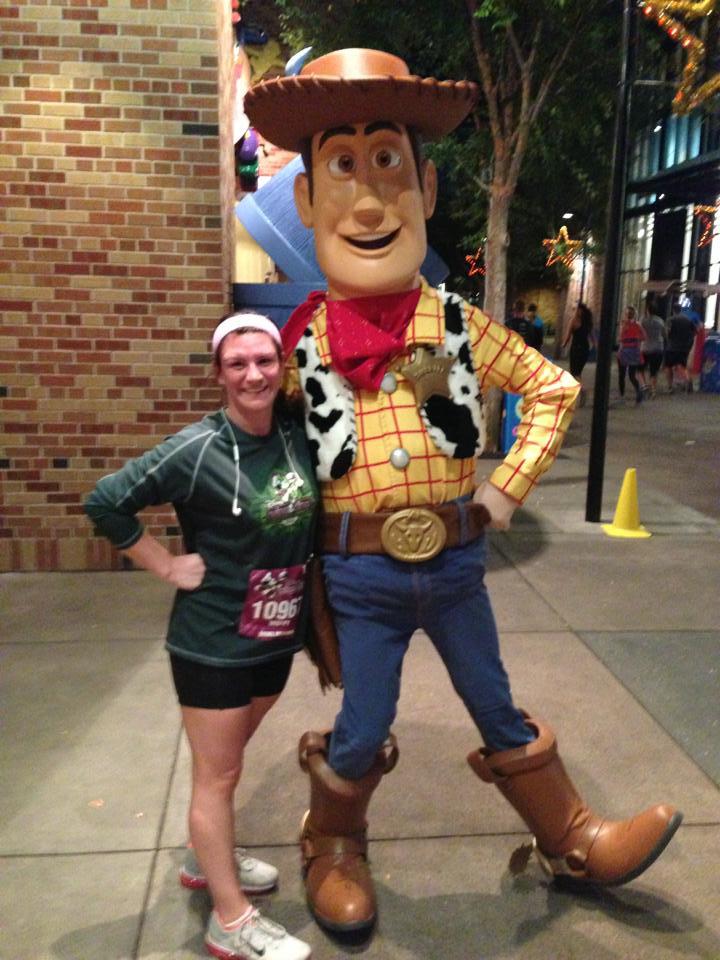
This past weekend I ran the Wine and Dine Half Marathon, and I couldn’t wait to Instagram my pictures from the run. I even hooked up my Twitter so that runDisney would post my times as I passed the checkpoints. I was utilizing Disney’s social media without even thinking about it.

What makes Disney’s social media so unique is that it has hundreds of different platforms. The parks have their own social media, so do the franchises the own, and even the movies have social media platforms. Mashable went inside the Disney Consumer Products (DCP) division of the Walt Disney Corporation, and examined their social media strategies.

One of the DCP does this is by being informal. Social media is not the place for traditional advertising. Users don’t want to seem like the company is trying to push a product down their throats. Building a relationship and causal conversation is more ideal. Another important aspect to keep in mind is that social media is everywhere and it changes how we communicate. Disney realizes this and knows it’s fundamental when keeping up with their fans. I know I think it’s magical when I get a reply or retweet from Disney.

Google is Here to Help

When I first took a PR class, I remember learning about the importance of a press release.  Covering the 5W’s and making sure the most important information came first in.

Well I recently discovered something in Google Docs…templates!  And one of those templates is for a press release.  This is a great resource if you want to make a professional press release, without having to spend too much time formatting it.

Plus, there are plenty of other resources on Google Doc Templates.  You can find templates for resumes, cover letters, school projects, and everything else!  This is a great place to help you out with any kind of document.  Be sure to check it out.

The Power of Social Media

With the recent death of Osama Bin Ladin, it’s been seen how much power social media has.  Most people heard about the news of his death on Sunday night through facebook and tweets.  According to the article, The 7 Stages of News in a Twitter and Facebook Era, after President Obama’s speech 4,000 tweets per second were being posted.

The article then goes on to state those seven stages.  To read more about them, follow this link.

With 4,000 tweets a second when breaking news occurs, we see how much power social media can hold.  I was probably in the minority during the Osama Bin Laden news.  I saw it on TV, not social media.  That’s not always the case though.  I remember hearing about the death of Michael Jackson on twitter.  I’ve also learned about new products through twitter.  I was probably one of the first people tweeting about the iPad after reading a tweet about it.  My main point, news travels fast through social media.

Revisiting Marketing Tips for Student Organizations

A few weeks ago I posted an entry about marketing tips aimed at student organizations, and gave seven different ways to market.  Today, I want to talk about developing a PR Plan for a student organization.

1. Come up with an objective or objectives for the organization.  An objective would be a statement that explains a goal you want to achieve and a deadline to achieve it by.  An example would be “to increase membership from 15 members to 25 members by the end of the fall semester.”

2. Come up with strategies to achieve this goal.  In the example about increasing membership, this could be done by advertising the club.  This could be done through flyers, social media, events, etc.

3. Create timeline to achieve your objective.  A deadline has already been set, but now there has to be a plan of how to get there.  Continuing with the example.  Maybe the first week of the plan, flyers will be posted around campus.  After that, the club could be promoted by social media, and finally once people see the advertisements for the organization, then hold an event to get them to come.

4. Consider you budget.  It’s great to have an objective and be able to achieve it, but it may come at a cost.  Consider how much the organization has to spent and if the input is worth the output.

It’s important to follow a plan like this when trying to promote a club.  Not every step has to be done like this, but it’s a good example to start with, and easy to adapt to other objective a club might have.  Give it a try!

Building a Good Résumé for PR Professionals

According to the PRSA article, Resume and Career Advice with a Background Summary, “The first two sentences of your résumé signal to employers whether or not you are right for the job.”  Career objectives are a thing of the past. Employers want a summary of your background.  This is will the thing that places you in or out of the running for the job.

The things that should be included in this summary are prominent PR skills, niche categories, and industries specialized in.  There shouldn’t be anything personal in it.  That is for the interview.

For more information or to read the full article, click here

Marketing Techniques For Student Organizations

PR can be used for more than companies, it can also be student for student organizations on a college campus.  In my PR2 class, one of our projects consisted of having to come up with a PR Plan for an organization on campus.  I’m an active Circle K International (CKI) member, so that’s the organization that I’m making the PR Plan for with the rest of my group members.

Since this is our main focus, I was doing some research and came across a great article written by International President, Amanda Marfisi.  She lists of the Seven Best Ways to Market CKI, and these techniques can be used for other organizations as well.  The seven ways are listed below:

  1. Tabling: don’t just sit behind a sign and hope people come to you! Have free food, handouts, fun music, or even a small service project. Getting people engaged as you talk to them is important.
  2. Flyers: think of all the flyers you have seen around campus. Typically 8 ½ by 11, black and white, sometimes with color if you are lucky. Think outside the box! Use publisher and try different size paper, make a long skinny banner type flyer, or a vertical skinny tie poster! Be sure to use graphic standards
  3. Chalk: this is not just a kindergarten past time, bring out the child in all your members and have them go out around the campus and chalk! In front of dorm rooms, University Centers, the library, etc.
  4. T-Shirt Day: in one year of CKI you usually end up with at least 3-4 shirts (one from DCON, Fall Leadership Conference, the club, and ICON). Pick a day during the week where all your club members where the same CKI shirt (this works especially well on a small campus).
  5. Door-to-Door: with technological advances, we sometimes forget the importance of a personal invitation. Each week send your board members out to a new dorm on campus. Flyer or brochure in hand, pair up and walk down each hallway knocking on each door. Personally hand them the flyer, explain who you are, and say how excited you would be to see them at your next meeting
  6. Personalized Facebook Messages: going back to the technological, how cool would it be to get an individualized message from the president!? After a tabling event, and collecting several names, take an hour or two to send each person who signed up an individualized message on facebook. You don’t have to “friend” someone to send a message, they see the extra effort that you want THEM there, and you might be able to gain a new facebook friend!
  7. Follow-Up: for those members who signed up, but didn’t make the first couple of meetings… don’t let them slip away! Or for those members who just stopped coming, follow-up. Send them an email message along the lines of “we missed having you at our meeting this week, we were really hoping to see you there. Hope to see you next week at this time, location. OR let me know if you want to see a list of the service projects to sign up for.”

These methods can be applied to almost any organization, not just CKI.  I would suggest if you’re a student group in need to some new marketing idea, try these out!

*Credit for this entry goes to Circle K International President, Amanda Marfisi based off her article call “Marketing CKI-7 Best” found in Circle K District Publications.

Twitter

A tweet can go a long way. Although tweets are usually personal opinion, what someone states on twitter can have a huge impact on followers perceptions of a product.

Tonight in my PR2 class we started an assignment involving twitter. First, we had to pick a company or product follow them and see what others say about the product.

I’m a big fan of twitter, so I figure this assignment gives me an excuse to play around on twitter. The company I decided to do was Vera Bradley because I’m a big fan of Vera purses. Now, not every tweet was right for my assignment, but there were some that could have an impact on the products. I saw plenty of links on where to get Vera bags for cheap, which would be considered a good tweet. But, I also found negative tweets. There were tweets that compared Vera to a cult and that young girls that purchase Vera Bradley have old lady souls…I can’t see how either of these are positive for the company.

This also made me wonder what kind of tweets other companies got. I searched for Coke by Coca Cola and got mostly good things about the product. Even found good things about Tiffany & Co. So why is it that when I searched for Kia or as mentioned above Vera Bradley I found plenty of negative things? And how much influence do these tweets have on the company’s products? That’s the next thing I’m on a mission to find out…

Read EVERYTHING!

Over the weekend I was elected to the District Board of the Michigan District of Circle K International.  I will be serving as the District Bulletin Editor meaning I make the newsletters to send out to all the clubs in the district.  I’ve been beginning to think what I want them to look like so I started going through bulletins the past editor has made and resources I got.  I really wish I had read everything on them sooner, because I have thousands of ideas I could have had for my publication at the club level.  The good news is I can at least take some of these ideas and use them this year in the district publication.

So my advice, when you get good resources and information from people, don’t just skim it…read everything!

Are Blogs a Helpful Tool?

Blogging about blogs; this should be interesting.

My question is, are blogs a helpful tool? In my PR1 class we had to create this very blog to answer the questions from the chapters compared to writing them on a sheet of paper and turning them in.  This way people could comment on them and give their own feedback to what was posted.  Most people in the class thought blogging was silly.  I remember my professor saying, “I don’t think you realize how important blogging is in the PR world.”  Is it?  I updated the blog for Adrian College last semester (link is on the side bar) and I’m pretty sure no one ever read it.

Due to that, last night in PR2 we had high school students attend that gave us a list of things they would want to read on a college blog to give them information about the school.  Knowing what your audience wants to hear is going to help increase how many people read your blog and respond to it.  I know people have been reading my blog, but haven’t received any comments on this blog since the assignment ended.

So here’s my question to you…what would you want to read about?